The best discounts this week
Every week you can find the best discounts here.

New 800W 4K HD Camera Smart Glasses Men 120+ Languages Translation Recording Videos Music Player Call Glasses 3600mAh Power Bank

Sleep Mask Blackout For Relaxing Plush Blindfold Cotton Sleeping Blindfold For Men Women Anti-noise Earmuff

Sleeping Mask Eyepatch Blindfold Light Travel Eye Mask for 3D Sleeping Mask Slaapmasker Night Sleep Patch Portable Eyemask Pad

100% Handmade Cotton Sleep Mask Blackout for Side Sleeper,Soft Portable Blackout Eye Covers for Women Men Travel Eyepatch

Sleep Eye Mask Weighted for Side Sleeper Men Women 3D Contoured Sleeping Mask No Eye Pressure 100% Blockout Soft Comfortable Eye

Sleep Mask Bluetooth Sleeping Headphones Headband Thin Soft Elastic Comfortable Wireless Music Headset Eye Mask For Side Sleeper
Artificial Intelligence: Making Life Smarter and Easier
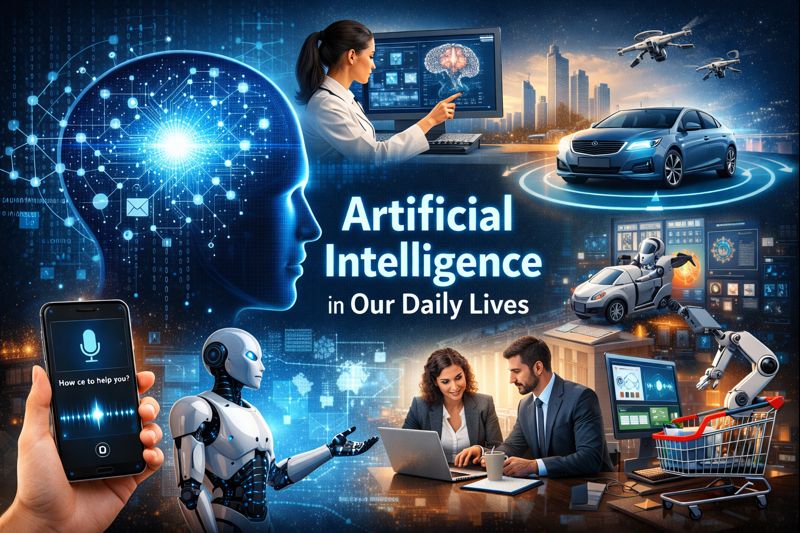
The Growing Impact of Artificial Intelligence in Our Daily Lives
Artificial Intelligence (AI) has rapidly transformed from a futuristic concept into a reality that shapes many aspects of our daily lives. From the smartphones we use to the online services we rely on, AI plays a crucial role in making technology smarter, faster, and more personalized. Its influence can be seen in industries ranging from healthcare to education, transportation, and entertainment.
One of the most notable applications of AI is in personal assistants like Siri, Alexa, and Google Assistant. These AI-powered tools use natural language processing to understand human commands and provide accurate responses. They help us manage schedules, answer questions, and even control smart home devices, making everyday tasks easier and more efficient.
In the healthcare sector, AI has brought revolutionary changes. AI algorithms can analyze medical data, detect patterns, and even predict diseases before symptoms appear. For example, AI is used in imaging technologies to identify tumors in early stages, significantly improving patient outcomes. Moreover, AI-driven chatbots assist patients by providing preliminary advice and scheduling appointments, reducing the burden on medical staff.
Transportation has also benefited greatly from AI advancements. Self-driving cars, powered by AI systems, are becoming more reliable and safer. These vehicles use sensors, cameras, and complex algorithms to navigate roads, detect obstacles, and respond to changing traffic conditions. AI is also used in traffic management systems to reduce congestion and improve road safety.
AI has significantly impacted business and marketing as well. Companies use AI to analyze customer data, predict buying behavior, and personalize advertisements. This not only improves customer experience but also increases efficiency and revenue. Additionally, AI-powered automation is streamlining tasks such as inventory management, customer support, and financial forecasting.
Despite these benefits, AI also raises ethical and social concerns. Issues like data privacy, algorithmic bias, and potential job displacement require careful consideration. Policymakers, researchers, and tech companies must work together to ensure that AI is used responsibly and benefits society as a whole.
In conclusion, Artificial Intelligence is no longer just a technological innovation—it has become an integral part of our lives. Its applications in daily life, healthcare, transportation, and business continue to grow, making processes faster, safer, and smarter. While challenges exist, the potential of AI to enhance human life is immense, promising a future where technology and intelligence go hand in hand.